From a firm’s perspective, the emergence of a new technology wave is a new opportunity to generate a financial return. The question is precisely how. That topic remains as salient today, in the era of artificial intelligence, as it was when firms first encountered smartphones, the commercial internet, and personal computers. Before we fully embrace …
Earning stripes in medical machine learning
Today we are living through one of those heady situations in which scientific, technical, and commercial frontiers all simultaneously advance in a grand interrelated dance. Advances in computer technology in the last decade opened up the potential for big gains in applications of neural networks aimed at recognizing and diagnosing visual images. Many startups and …
Continue reading "Earning stripes in medical machine learning"
The Aftermath of the Dyn DDOS Attack
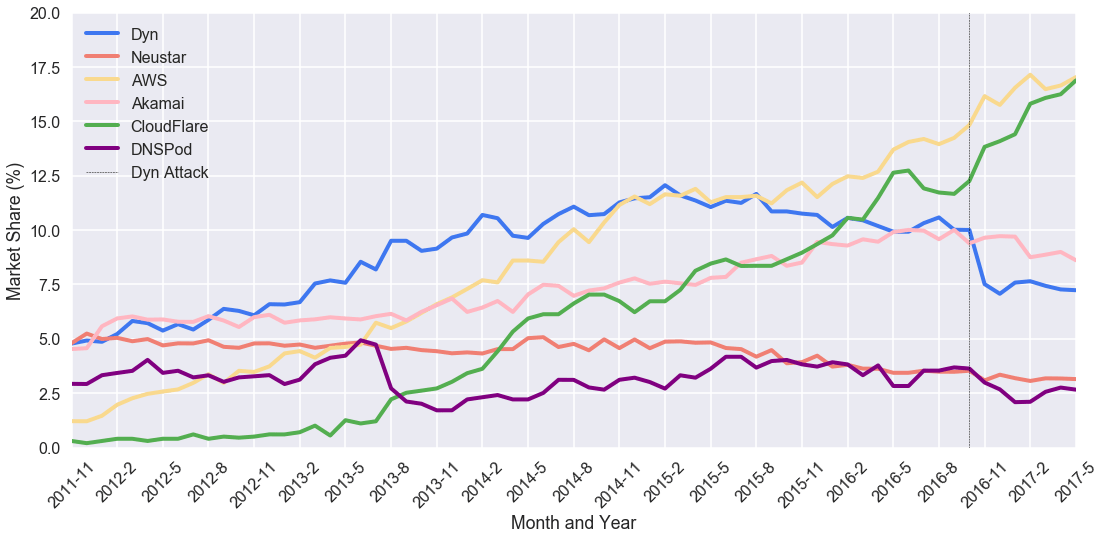
Nobody knows who organized the attack. It might have come from an angry gamer, or from a rogue spy, or, perhaps, an angry rogue spy playing games. The program hijacked many cameras and home devices, and redirected them to engineer a series of distributed denial of server (DDOS) attacks on a few hours apart, all …
Reflections on Galbraith’s New Industrial State, 50 years later
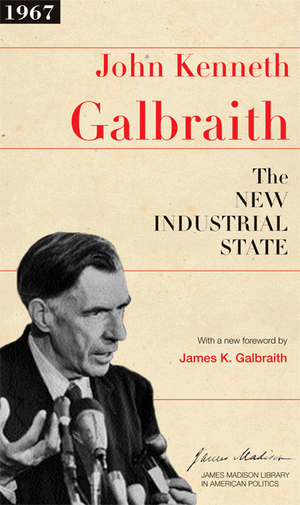
[This Post initially appeared in HBR Online on August 22, 2017] This summer marks 50 years since the publication of John Kenneth Galbraith’s The New Industrial State and its quick rise to the top of the New York Times Best Seller list. The book was one of the rare instances where an economist was able to capture public imagination and …
Continue reading "Reflections on Galbraith’s New Industrial State, 50 years later"
The Value of Free in GDP
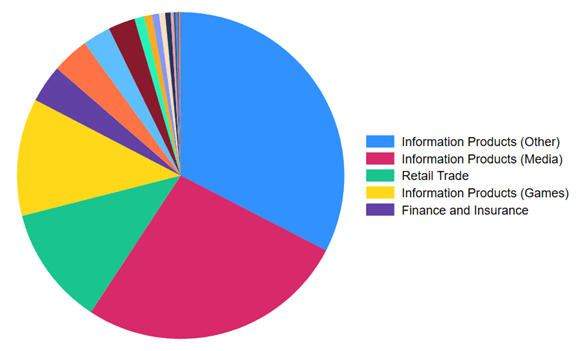
Did the rise of free information technology improve GDP? It is commonly assumed that it did. After all, the Internet has changed the way we work, play, and shop. Smartphones and free apps are ubiquitous. Many forms of advertising moved online quite a while ago and support gazillions of “free” services. Free apps changed leisure long ago—just ask any teenager or any parent …
Wikipedia and Political Discourse: The New Hope?
Rob Gebelhoff of the Washington Post wrote an awesome piece about the latest Wikipedia research to come from Feng Zhu, Yuan (Grace) Gu, and yours truly. The piece by Gebelhoff is called "Science Shows Wikipedia is the Best Part of the Internet." It refers to our research, Ideological Segregation Among Online Collaborators: Evidence from Wikipedia. A …
Continue reading "Wikipedia and Political Discourse: The New Hope?"
Economic Growth from Technical Advance
Human existence changed irreversibly after the invention of indoor plumbing and the municipal supply of water and sewage. The advent of electricity also changed life as we know it, and so did automobiles, the telephone, penicillin, pasteurization, the polio vaccine, and much more. In his book, The Rise and Fall of American Growth; The US …
Lepore's missing cites
Emma Jacobs has a nice review of The Disruption Dilemma in the Financial Times. It is always pleasing to read that "[t]his is an interesting and well-written, pithy book dealing with one of the buzziest concepts in business." However, right at the end, she took issue with one thing: However, it is strange that Gans …
Twenty Years of the Commercial Internet (Part 2)
How did the deployment and uptake of the Internet bring about growth in the US economy? That is a fundamental economic question that still resonates today, because many of these events yielded lessons that we can take to the present. The topic is hard to address because many participants experienced these events in different ways. …
Continue reading "Twenty Years of the Commercial Internet (Part 2)"
Heidi Williams, Macarthur Genius
MIT Assistant Professor in Economics, Heidi Williams, yes, you read that right, Assistant, was just award a Macarthur Genius grant. Here is the official citation. And here is the short form: Heidi Williams, 34, an economist at the Massachusetts Institute of Technology, whose “insights about market inducements for innovation and the implications of technological change …