

A couple of days ago, Spotify announced it was pushing the European Commission to investigate Apple's app store practices. They claimed that Apple was discriminating against them (and presumably other streaming services) on account of their own competing Apple Music service. Spotify claimed they had to pay Apple 30 per cent of their revenue which …
Compulsory licensing is better than blocking acquisitions
There are many people wanting to unroll past tech acquisitions. Others certainly would advocate doing it differently if there was another chance. For instance, Ben Thompson called Facebook being allowed to purchase Instagram "the greatest regulatory failure of the last decade." I don't really see that but that is another matter. The problem, at the …
Continue reading "Compulsory licensing is better than blocking acquisitions"
Since when is Apple owning the App Store a problem?
I don't mean to be spending time critiquing Elizabeth Warren per se, I kinda like most of her policies but this antitrust stuff is just crazy. Now, in an interview with The Verge, Warren takes aim at breaking up Apple. Yes, Apple. And in a way that it is pretty surprising. She wants to have …
Continue reading "Since when is Apple owning the App Store a problem?"
When breaking up makes no sense
Elizabeth Warren wants to break up Facebook, Amazon and Google. Why? In the 1990s, Microsoft — the tech giant of its time — was trying to parlay its dominance in computer operating systems into dominance in the new area of web browsing. The federal government sued Microsoft for violating anti-monopoly laws and eventually reached a settlement. The government’s antitrust …
Six Infrastructure Trends

Today internet infrastructure encompasses root servers, broadband lines, routers, content delivery net-works, cloud storage and cellular towers. Broadly construed, these physical assets perform two related and essential services for the modern digital economy. Infrastructure acts as an intermediate input for the production of many services by firms and it acts as an intermediate input into …
Harold Demsetz. An Appreciation.
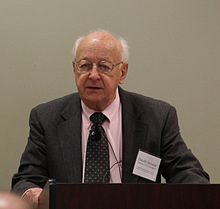
By Thomas Hubbard. I learned this morning that Harold Demsetz passed away last week. He was 88. Harold was an enormously influential figure in industrial organization, the economics of organization, and law and economics. He grew up in Chicago. As a kid one of his part time jobs was being a peanut vendor at Wrigley …
Smart Contracts with Fine Print
From its very early days, one of the main areas where blockchain enthusiasts argued there was potential for radical innovation was in the ability of the technology to house smart contracts. The Ethereum network was designed with this in mind: to be a distributed ledger with a 'Turing complete' virtual machine on top of it. …
2018 Digital Year in Review

It is time once again to give awards for the biggest events in IT in 2018. And what a fun year to review! So many crazy events deserve ridicule. Where to start? Before we begin, let’s review the rules. They have not changed since last year. Any event can receive an award if it contains …
On Facebook’s management and regulatory approach
At a conference in Brussels last week I made a short speech about Facebook and its poor approach to regulatory management and innovation. I refer at the end to this paper from The Hamilton Project.
Free Software without a Free Lunch or Free Beer

Economists like to say that there are no free lunches. How does that attitude apply to free software and services? It is no secret that many prominent platforms give away services, and so do many widely used open-source projects. The answer should help us understand our world. While it costs next to nothing to replicate …
Continue reading "Free Software without a Free Lunch or Free Beer"
 Digitopoly